How to Condition Shibari Rope: A Complete Guide to Jute, Hemp & Synthetic Rope Care

If you buy your first set of beautiful jute ropes and they arrive slightly stiff, fuzzy and not nearly as soft as the ropes you see experienced riggers using, don't panic.
Your rope probably isn't bad.
It may simply be raw jute rope that hasn't been conditioned yet.
Rope conditioning is one of those Shibari subjects that can sound incredibly complicated when you first start reading about it. People talk about dryers, flames, oils, waxes, rope butter, washing, boiling, stretching, polishing...
But the first thing to understand is this:
Not every Shibari rope needs conditioning.
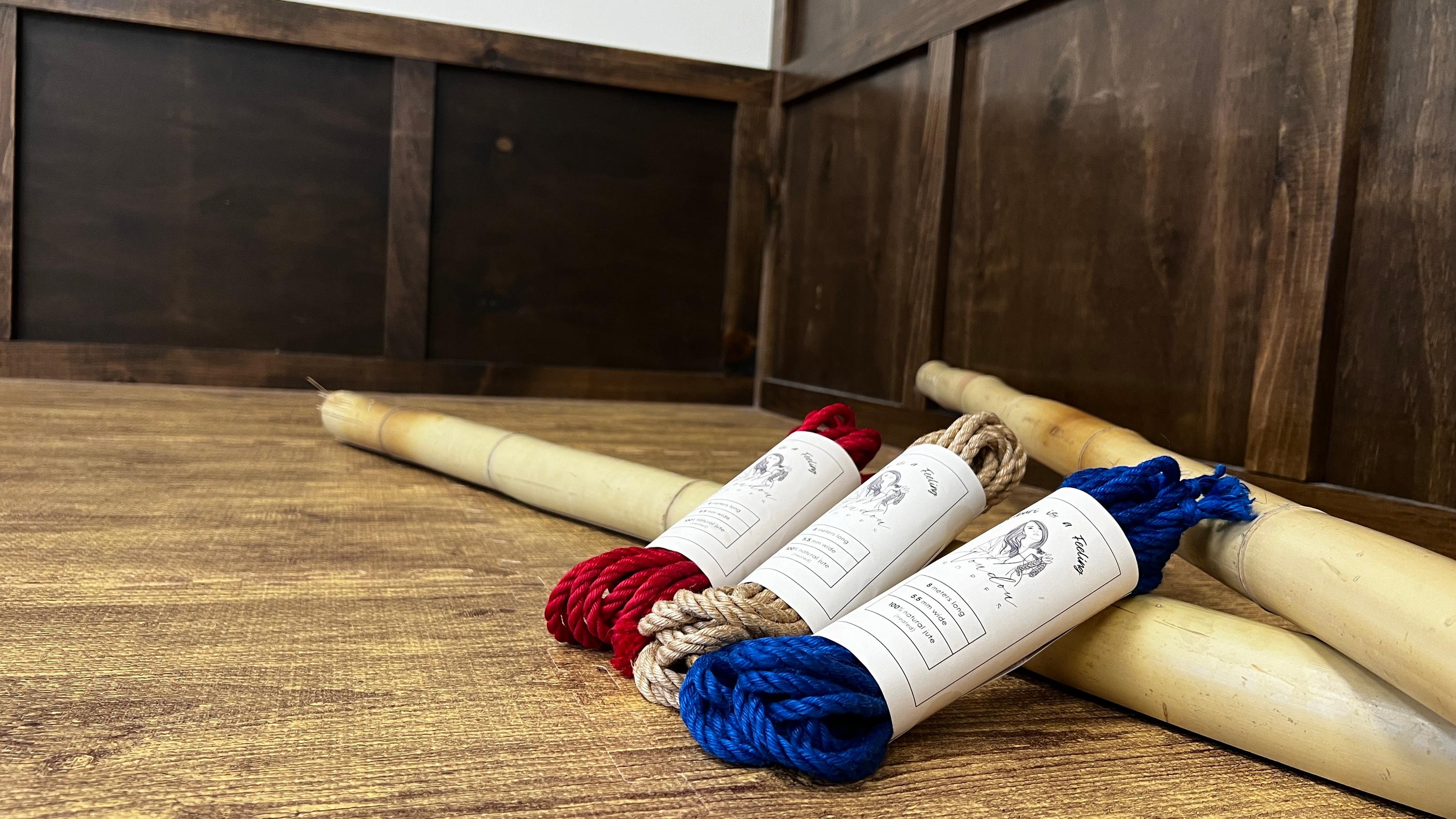
In fact, some ropes should simply be taken out of the package and used. (like the ones we sell here at VoudouRopes, arrive perfectly soft and nice, ready for you to enjoy!)
So let's look at what rope conditioning actually does, which ropes need it, which ones don't, how difficult it is, and how I recommend caring for your Shibari ropes over time.
To see exact steps of jute rope conditioning skip half of explanations and scroll down ;)

What Is Rope Conditioning?
Rope conditioning is the process of breaking in and finishing a natural-fiber rope, usually jute, so that it becomes smoother, more flexible and nicer to handle.
Fresh raw jute can be:
stiff
hairy or fuzzy
slightly scratchy
dusty
resistant to bending
less pleasant to run quickly across the skin
Conditioning helps remove some of the loose fibers and make the rope more pleasant to use. A good conditioned jute rope should still feel like jute. It doesn't need to become ridiculously soft.
Actually, one of the reasons I love jute is exactly because it has texture.
And remember: using your rope is also conditioning it.
Jute becomes softer and more flexible naturally as you tie with it. Yes, it absorbs oils from humans you tie ;)
The treatment process simply speeds this up.
Which Shibari Rope Needs Conditioning?
This is where people often get confused.
Raw Jute Rope: YES
If you're buying untreated or raw jute, it will usually benefit the most from conditioning.
This is the classic situation people mean when they talk about "conditioning Shibari rope."
Depending on the rope, you may want to:
remove excess fuzz
soften the fibers
add a very small amount of oil or rope wax
polish it
allow it to break in
Different jute has very different personalities, too.
Some high-quality jute is already relatively smooth directly from the reel and needs very little work. Other jute can arrive quite stiff and hairy and requires considerably more patience.
This is one reason why extremely cheap hardware-store jute isn't necessarily the bargain it appears to be. You may spend hours trying to turn it into something comfortable enough to use on a person, and it may never become comfortable.
Pre-Conditioned Jute: Usually NO
This is an important one.
If your jute was sold as conditioned, treated, finished or ready to use, you do NOT need to repeat the entire conditioning process before using it.
Take it out. Feel it. Inspect it. Tie with it.
That's the point of buying pre-conditioned rope.
For example, the Voudou Ropes Asanawa jute ropes are already conditioned before they reach you. They are designed to be soft, flexible and ready for tying rather than giving you another weekend project before you can actually use them.
Eventually, even pre-conditioned jute may benefit from some maintenance, but that's very different from preparing completely raw rope.

Does Hemp Rope Need Conditioning?
Usually, not in the same way as raw jute.
Hemp is another natural fiber commonly used for bondage, but good Shibari hemp is often already relatively pleasant to handle.
It will continue to soften naturally with use.
Depending on the manufacturer, hemp can sometimes benefit from a small amount of appropriate rope oil if it becomes very dry, particularly after washing.
But don't automatically take every piece of hemp through the jute-conditioning ritual.
And when it comes to washing hemp, follow the instructions from the actual manufacturer of your rope. Hemp construction and treatment vary considerably.
Does Cotton Rope Need Conditioning?
NO.
Does Synthetic Shibari Rope Need Conditioning?
No.
Synthetic bondage ropes such as POSH do not need traditional jute conditioning.
Don't put rope butter on them. Don't oil them because somebody told you that "all Shibari rope needs oil." And there is absolutely no reason to run them through a flame like jute.
Synthetic rope is popular precisely because it can be incredibly low-maintenance.
I use both jute and POSH a lot, and they're very different experiences.
Jute gives me that traditional texture, smell, grip and responsiveness that I associate with Japanese rope. POSH is much silkier against the skin, durable and easy to care for. Neither one is "better." They're simply different tools.
If you want to understand those differences more deeply, read my Best Rope for Shibari guide after this article.
Does Bamboo Silk Rope Need Conditioning?
No.
With this type of rope, care is mostly about keeping it clean, following the washing instructions and storing it properly.
So if you bought bamboo silk because you want something gloriously soft on the skin, congratulations: you get to skip the conditioning ritual.
So… How Hard Is It to Condition Jute Rope?
Honestly?
It isn't technically difficult. It is just VERY time-consuming.
You mostly need:
patience
somewhere you can make a mess
a good understanding of the material you're working with
a little rope wax/oil if you're using it
appropriate equipment for the method you've chosen
enough attention not to damage your rope
The annoying part is that an 8-meter rope is… eight meters long. And if you have ten ropes, you've suddenly got 80 meters of rope that wants your attention. This is also why buying professionally pre-conditioned jute often makes sense, especially for beginners.
But if you're a rope nerd - and many of us eventually become one - conditioning your own rope can actually be quite satisfying.
You start learning exactly what kind of rope you like.
How to Condition Raw Jute Rope
There are MANY methods for conditioning jute.
Ask five experienced riggers and you'll probably receive six opinions.
Some people tumble dry it. Some don't. Some put it through fire. Some use wax. Some use jojoba oil. Some use baby oil.
Others barely treat their rope at all and simply allow it to break in through use.
Personally, I think it is more useful to understand what each step is supposed to achieve than blindly follow somebody else's ritual.
Here is a simple dry-conditioning approach.

Step 1: Cut and Finish Your Rope
If you've purchased jute by the reel, first cut it to your desired length.
For shibari 7-8 meters is very common, although rope length is personal.
Secure the ends so the strands cannot unravel.
Before doing anything else, run the complete rope through your hands.
Look for:
irregularities
very thin sections
unusually thick sections
damaged fibers
hard plant material
manufacturing defects
Get to know the rope you're about to put on somebody's body. This inspection is something you should continue doing throughout your rope's life.
Step 2: Break In the Rope
The goal here is to relax the rope slightly and encourage loose surface fibers to come away.
One common method is dry tumble conditioning.
Notice the word dry. You're not washing the rope. Some rope makers use a tumble dryer on a low heat setting to soften jute and collect loose fibers in the lint filter.
How long this takes depends heavily on the rope and the dryer.
Put your rope into a daisy chain and into a laundry bag (of a few of those) for delicates. Put it in for 5-7 min, run it, look at it, check what is actually happening to your rope. Run this 2-3 times.
Has it become more flexible? Has a lot of loose lint come off? Is it getting excessively hot? Does anything smell strange?
This is not a "put it in and forget it" process.
Also remember that loose natural fibers plus heat require common sense and fire awareness. Clean the lint filter and don't use equipment in a way the manufacturer does not permit.
If you don't want to use a dryer at all, that's fine too. Good jute can simply be broken in gradually through handling and tying.
You can skip this step and still get a great conditioning from next ones.
Step 3: Remove Excess Fuzz
New jute naturally has small fibers sticking out from its surface. Some fuzz is completely normal. You are not trying to make jute look like polished nylon.
One traditional finishing method is very quickly passing the rope through a clean flame to singe loose surface fibers. This gives jute that smoother, cleaner appearance many people associate with conditioned Shibari rope.
I tried using a gas stove burner on low setting, an Emergency Stove Fuel can outside, even tried doing it with a candle flame (this was a bit too slow and meditative for the amount of ropes I was trying to deal with). You can also use a campfire... But be careful with either of them.
Jute burns!
You're holding a flammable material next to a flame (obviously).
Never stop with one area sitting inside the flame. Work in a ventilated, non-flammable area, keep loose material away, and have appropriate fire-safety equipment nearby.
If you're uncomfortable doing this, skip it.
You do not need a baptism by fire to become a real Shibari practitioner.
Loose fuzz can also be managed more gradually through normal use, just takes longer.
Step 4: Apply a Tiny Amount of Rope Oil or Wax
And I mean tiny.
One of the most common rope-conditioning mistakes is drowning jute in oil. Your rope should not feel greasy. It shouldn't leave a bunch of oil on somebody's skin. It shouldn't stain your clothes.
Rope oil or wax is primarily there to help keep the fibers supple and improve handling.
Jojoba oil is frequently used because it is a stable wax-like oil, and there are also products specifically sold as rope wax or "rope butter."
Put a very small amount onto your hands or a clean cloth and pull the entire rope through it. I use cotton gloves, put oil on them and run the rope through it.
Step 5: Polish and Inspect
After applying your treatment, run the rope through your hands again.
This distributes the product and gives you another opportunity to inspect every part of it. Some people also gently polish the rope against itself or through their hands.
You're aiming for a rope that feels:
flexible
clean
pleasant in the hand
not greasy
not excessively fuzzy
This is one of my favorite things about working with natural fiber.
By the time you've conditioned an entire rope set, you have literally touched every centimeter of it several times. You start noticing tiny changes in texture immediately.
That relationship with your rope becomes incredibly useful once you start tying more seriously.
Step 6: Let the Rope Rest
After oiling or waxing, don't immediately throw the ropes into a sealed bag.
Let them breathe. Hang them for a day or two, or loosely coil them somewhere dry with good airflow and allow the treatment to settle into the fibers.
Then feel them again.
If they still feel oily, they have too much product.
Wipe them down and give them more time.
Once they feel clean, dry and supple, they're ready to tie with.
Can You Just Use Raw Jute Without Conditioning It?
Yes.
This often surprises people. You don't HAVE to perform an elaborate rope-conditioning ceremony before a raw jute rope touches a human. Good jute will naturally break in with use. Bad jute (like the hardware store ones) probably won't.
Some practitioners intentionally use new rope for less skin-sensitive applications at first and allow the fibers to soften gradually.
So think of conditioning as accelerated breaking-in, not some magical process that turns unsafe rope into safe rope.
Conditioning cannot fix terrible rope. It can't transform damaged fibers into strong fibers. And it absolutely does not make an unknown piece of hardware-store rope magically appropriate for suspension.
The quality of your original rope still matters.
What NOT to Do When Conditioning Jute
This might be more important than the previous section.
Don't Saw Your Rope Aggressively Over Hard Objects
You've probably seen people trying to soften rope by violently dragging it backwards and forwards around a pole, carabiner or other small hard object. Be careful. Excessive abrasion and sharp bends can damage natural fibers. Your goal is to relax the rope - not mechanically destroy it.
Don't Over-Oil It
More oil does not equal healthier rope. If it feels greasy, you've gone too far. Use very small quantities.
Don't Automatically Wash Raw Jute
Wet treatment is one of the more debated subjects in the rope world. Water changes natural fibers and jute can shrink, distort or become difficult to handle as it dries. I have a whole article about WET JUTE.
Don't Use Fire on Synthetic Rope
Flaming is a jute finishing technique. Synthetic fibers can melt. Different material, different rules.
How Often Should You Recondition Jute Rope?
There isn't a calendar notification that says:
Congratulations! Today is Rope Conditioning Day.
Look at your rope instead. It may need some attention when it starts becoming:
noticeably fuzzier
unusually dry
stiff
unpleasant to handle
covered in loose surface fibers
For someone tying occasionally, maintenance might be very infrequent.
If you use the same kit constantly, especially for demanding tying, you'll obviously inspect and maintain it much more often. Usually you don't need to repeat the full process.
A maintenance session might simply involve:
inspecting the rope
removing excessive fuzz
applying a tiny amount of appropriate wax/oil if the fibers feel dry
polishing it
allowing it to air
The goal isn't to continually process the rope. It's to keep it pleasant and monitor its condition.

Conditioning Is NOT the Same as Safety Inspection
This deserves its own section. A rope can be beautifully conditioned and still need to be retired.
Natural rope changes with use.
Watch for:
obvious thinning
broken strands
unusual soft spots
severe abrasion
damaged sections
major inconsistencies in diameter
areas that have experienced excessive friction or heat
This becomes especially important when rope is used in load-bearing Shibari or suspension.
Suspension introduces substantially different risks from decorative or floor tying. Conditioning your ropes does not certify them for suspension, and no amount of oil or wax restores damaged fibers.
Inspect your ropes frequently and retire questionable rope from load-bearing use. Old rope doesn't necessarily need to go into the trash, either.
I have ropes that move from suspension rope → floor rope → practice rope → tying-things-around-the-studio rope.
Rope retirement can have stages.
How Should You Store Shibari Rope?
Once you've gone through all the trouble of making your ropes beautiful, please don't put them away wet. Natural rope likes to breathe.
Store it:
completely dry
somewhere with airflow
away from excessive moisture
loosely coiled or bundled
away from chemicals and strong odors
Humidity is particularly important if, like me, you live somewhere tropical.
If your ropes have absorbed moisture during a session, let them air completely before returning them to a closed rope bag.
For synthetic and washable ropes, follow the manufacturer's cleaning and drying instructions.
Should You Buy Raw or Pre-Conditioned Jute?
If you're interested in understanding rope as a material, buying raw jute once and conditioning it yourself is actually a fascinating exercise.
You'll learn a LOT. You'll suddenly understand what people mean when they describe rope as dry, loose-laid, firm, hairy, lively or well broken-in.
But if your goal is:
"I want my rope to arrive and I want to tie somebody tonight,"
buy conditioned rope.
There is absolutely no prize for doing everything yourself.
At Voudou Ropes, our Asanawa jute is pre-conditioned and ready to use, because I want beginners to experience what good jute is supposed to feel like before worrying about how to process it.
You can always become a rope-conditioning nerd later.
Most of us do.

Final Thoughts: Your Rope Will Become Yours
One of the beautiful things about natural-fiber Shibari rope is that it changes. A new rope and a rope you've tied with for two years do not feel the same. With time, your hands polish it. Your sessions soften it. The rope becomes more flexible and familiar.
Eventually, I can reach into a rope bag and recognize some of my ropes just from the way they move through my hands.
So don't obsess over creating the "perfect" conditioned rope on day one.
Start with good-quality rope. Treat it gently. Learn how it feels. Inspect it. Use it. And allow it to age with your practice.
Because rope conditioning isn't really about making jute as soft as possible.
It's about helping your rope become comfortable, responsive and beautiful to tie with - while understanding the material you're trusting in your hands.
Frequently Asked Questions About Rope Conditioning
Do you have to condition jute rope?
Not always. Raw jute usually benefits from conditioning, but good jute can also break in naturally with use. Pre-conditioned jute is designed to be used immediately.
How do you soften jute rope for Shibari?
Jute can be softened through normal use or through dry conditioning involving gentle mechanical break-in, removal of loose surface fibers and a very small amount of suitable rope oil or wax.
What oil is best for Shibari rope?
Jojoba oil or Camellia (Tsubaki) oil are ones of the most commonly used options for jute, and specialized rope waxes or rope butters are also available. Whatever you use, apply it very sparingly.
Can I use coconut oil on jute rope?
Coconut oil is .. very oily!! I prefer products specifically chosen for rope care. Oils differ in stability and some can oxidize or become unpleasant over time, so don't assume that whatever happens to be in your kitchen belongs on your rope.
Does synthetic Shibari rope need conditioning?
No. Synthetic rope does not require traditional jute conditioning and should not be treated with flame or rope oil simply because those methods are used for jute.
Can you wash jute rope?
It is possible, but wet treatment changes natural fibers and needs more care than washing synthetic or cotton rope. Do not use jute rope that has been in water for suspension lines.
How often should I condition my Shibari rope?
Condition it according to its condition, not according to a strict calendar. If jute becomes excessively fuzzy, dry or stiff, light maintenance may help. Frequent inspection is more important than frequent conditioning.
Can conditioned jute be used for suspension?
Conditioned and strong jute can. But conditioning alone does not determine whether a rope is appropriate for suspension. Rope construction, original quality, diameter, age, history, damage and the practitioner's knowledge all matter. Suspension is an advanced, inherently risky form of Shibari and requires specific training beyond ordinary rope care.