What Is Shibari? Meaning, Origins, and How It's Practiced Today
I hear this question all the time - after performances, in my DMs, from a curious stranger watching me coil my ropes at a festival: “So… what exactly IS shibari?”
Short answer? Shibari is the Japanese art of rope bondage - tying a person with rope, beautifully and with intention.
Long answer? Shibari is a feeling. It's connection, trust, and presence, expressed through rope. The knots are just the alphabet - the poetry is what happens between two people (or between you and yourself!) while the rope is moving.
I've been tying for many years, I majored in Japanology at university, and I've returned to Japan again and again to study and practice rope there. So let me give you the full answer - the word, the history, and what shibari actually looks like today in a modern studio. (Written from my personal experience and my point of view, as always - this is a living art, and no single article can hold all of it!)
What Does the Word “Shibari” Mean?
Time to use my Japanology degree (I didn't study all those kanji for nothing, right?!).
Shibari 縛り is a noun coming from the verb shibaru 縛る - to tie, to bind. And here's the funny part: in Japanese it means tying ANYTHING. A package. Your shoelaces. There is nothing inherently erotic or artistic in the word itself - it's the practice that filled it with meaning.
Shibari vs Kinbaku - Same Thing?
You will also meet the word kinbaku 緊縛, which translates as “tight binding”: 緊 kin - tight, 縛 baku - the same kanji as in shibaru. Kinbaku - means exactly Japanese erotic rope bondage. In Japan this word is used more.
Some Japanese masters mostly say the two words are equal, and in Japan people use both. Western practitioners often argue that shibari is what's directed outward (aesthetics, patterns, shows) and kinbaku is what happens between partners. I wrote a whole piece about this debate - Shibari vs Kinbaku - if you want to go deeper.
And if you arrived here searching “what is rope play called” - congratulations, you found it! Shibari, kinbaku, Japanese rope bondage, rope play… different doors into the same room.
Where Shibari Comes From
Here I have to tell you a little story, because my own path into rope literally started with the history.
At university, my Japanese history professor once showed us photos from the Japan-Korea war. In one picture, people on a ship were tied up - elaborately, carefully, almost decoratively. I asked him what it meant. He got surprisingly excited, really elaborated on the history of those knots, and later sent me piles of research materials on erotic life in the Edo period and on modern shibari art. That was it. I was gone. =)
The roots go back to hojōjutsu (捕縄術) - the samurai-era martial art of restraining prisoners with rope. Rope was practical, precise, fast, and full of meaning - the way a person was tied could say who they were and what they had done. My first ties ever were actually hojōjutsu patterns from a book! (or more like attempts to replicate those)
Over time that martial vocabulary flowed into theater, into Edo-period erotic art, and - in the 20th century - into the underground world of Japanese magazines and performance, where rope became openly erotic and artistic.
And this magazine chapter deserves a moment, because it's where kinbaku as we know it was really born. In 1947, a legendary fetish magazine called Kitan Club (奇譚クラブ - “club of strange tales”) appeared - and its pages became THE home for rope. It published the work of Itoh Seiu, the artist we now call the father of kinbaku, and of rope masters like Minomura Kou. Other fetish magazines followed - Uramado (裏窓 - “rear window”), Fuzoku Soshi, later SM Select and SM King - and for decades this underground press was where riggers learned, argued, and showed their art to each other. No internet, no tutorials - just magazines passed from hand to hand!
And then photographers like Araki Nobuyoshi brought shibari to the eyes of the Western world. His works changed my life personally - seeing rope treated as fine art was the moment my “hobby” became a calling.
So no, shibari is not an ancient sacred ritual passed down in secret temples. It's a living art, barely a century old in its erotic form, still evolving right now - in Tokyo dojos and in studios... like mine.
Shibari in Japan Today
Japan is where shibari comes from. And yes, rope life there is very much alive. But it looks different from what most people imagine.
And here is something important: even in Japan, shibari is still not an open thing. It's very underground. There are no big neon signs saying “ROPE HERE” - you need to know where to go, who to ask, which door to knock on. (Half of the rope places I love are tiny rooms hidden in the most unremarkable buildings!)
Shibari in Japan is often approached like a discipline, sometimes even compared to a martial art. Students study with the same teacher for years. Progress is slow, focused, detail-obsessed. There are rope bars, salons, and weekly rope jams - Hajime Kinoko's dojo IchinawaKai has group classes every Tuesday! And there is a strong sense of etiquette: arrive on time, dress simply, observe quietly, respect the flow of the space.
I've written in detail about learning shibari in Japan - classes, prices, culture, where to go. If Japan is calling you, I truly encourage you to go at least once. Seeing how rope is treated there will change how you touch your own ropes.
What Shibari Looks Like in a Modern Studio
Now, the part most articles skip: what actually HAPPENS in a shibari session today?
Honestly? Anything can happen - there are SO many different styles of shibari. The right answer here is: whatever you want to happen.
If someone comes and wants a passionate session, it would be full of connection, fire and tension. Teasing, shaking, breath on the skin. We would dance with the rope, be in our own bubble together - and I would be hunting my model, making her feel like she is my dinner that I play with. Rope pulls close, lets go, catches again… the tension builds and builds, and nothing exists outside that bubble.
And if someone comes to me feeling a bit nervous, never having tried rope before, asking for an overview of what rope can be - that session would look very different.
A real session usually starts with… a conversation. We sit down, have some tea, we talk about intentions, boundaries, health, what your body likes and doesn't like. Then some breath work, to arrive in the moment. And only then - rope.
The tying itself would be slow. Rope moves over the body, tension appears and releases, positions change. Most of it is floor work (newaza), not the dramatic suspensions you see on Instagram. As you are bound and taken care of, you can let go of your responsibilities and simply feel. While your body surrenders, your mind is fully in the present, catching every little detail. The untying is just as important - slow, gentle, a return to your own body.
But more than anything, we would be creating a space together - calm, trust, connection. My job is to make you feel beautiful, to make you feel like you are the most important person in the world and nothing else matters. (And honestly, this should happen in EVERY session, whatever the style!) This is why rope feels so good: you really feel that everything here is done for YOU, inspired by YOU. You are a real muse of the process.
For some people if everything feels good we would go into partial suspension or even full suspension for some time.
And after the ropes are off, there is aftercare: water, warmth, cuddles, a talk (chocolate, anyone?).
And one crucial thing: the person in the ropes is not a decoration. Rope bunny = partner, not prop. A tie is 50% the model (if not more!) - their breath, their trust, their feedback shape everything.
The Many Faces of Modern Shibari
There is no single “right way” to practice rope, and honestly this is my favorite thing about shibari today. In one weekend you can see:
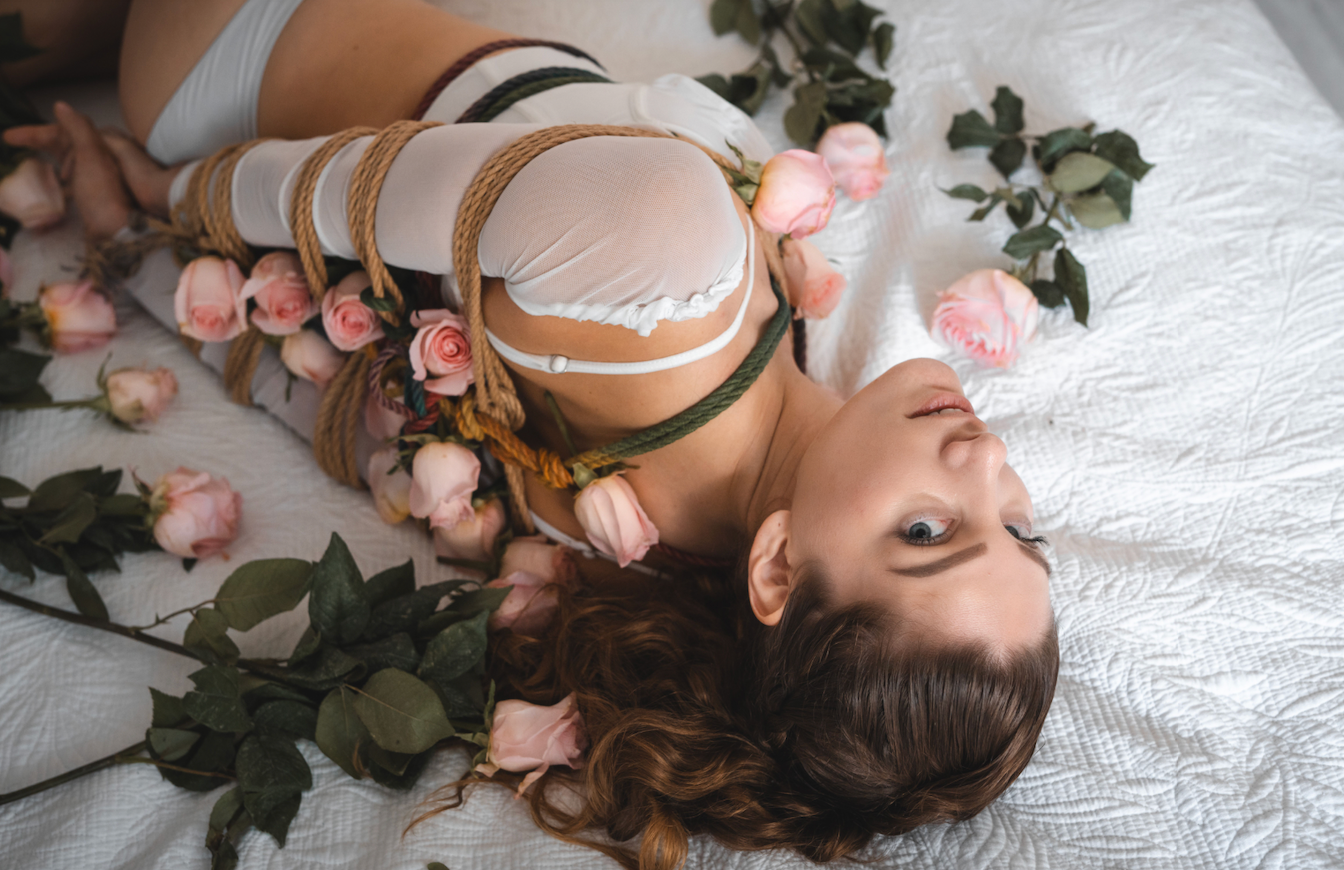
Soft, sensual tying - slow cocooning, gentle tensions and frictions, connection first. This is the heart of what I teach.
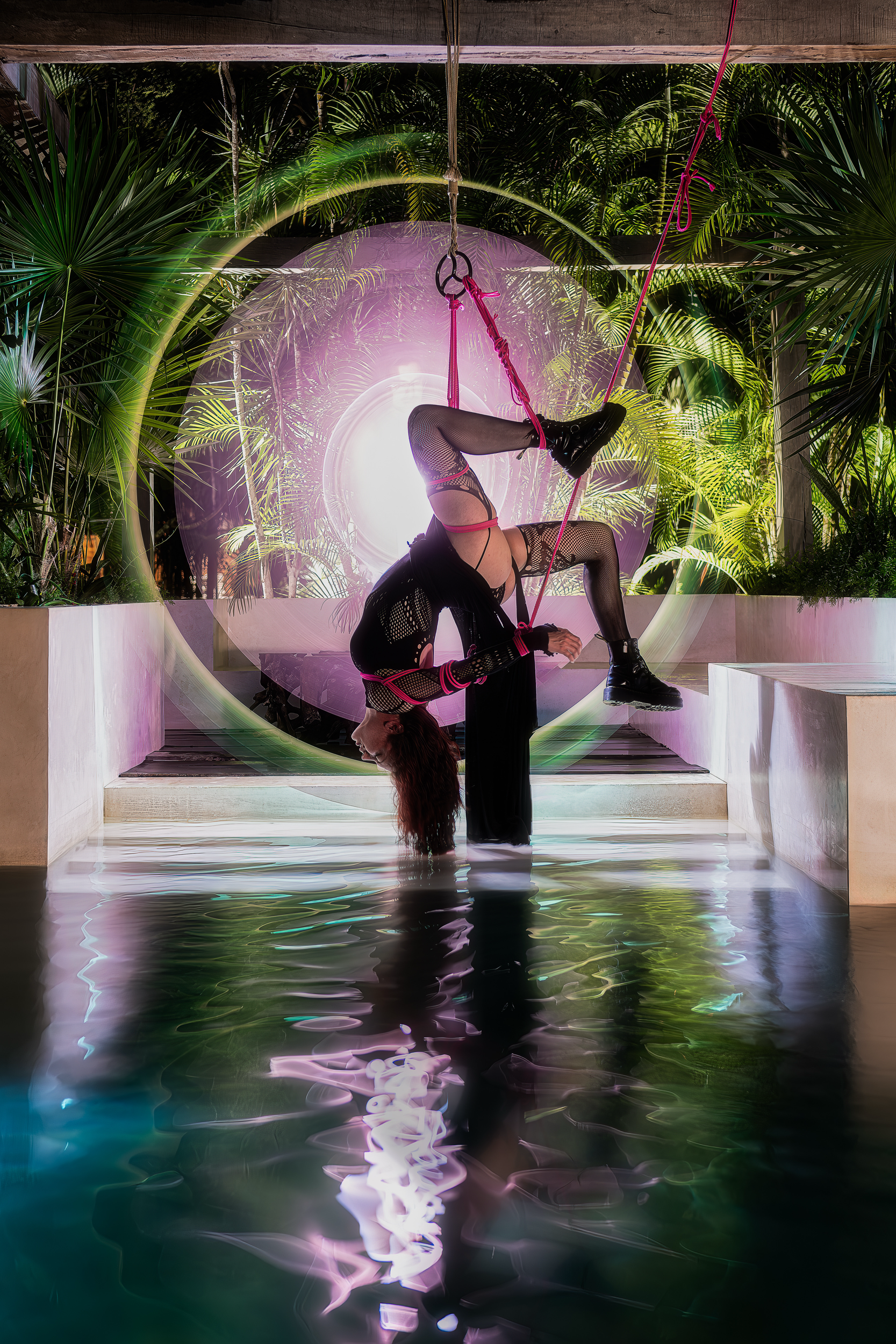
Performance and dynamic suspension - dramatic transitions and artistry on stage.
Meditative and therapeutic rope - shibari as a form of mindfulness, sometimes with sound healing or breath practices.
Decorative tying - karada body harnesses, festival looks, rope as wearable art.
Kinky, erotic rope - yes, of course! Power exchange, vulnerability, passion - all welcome, all valid.
Self-tying - rope as a self-love practice, a great cuddle you give yourself.
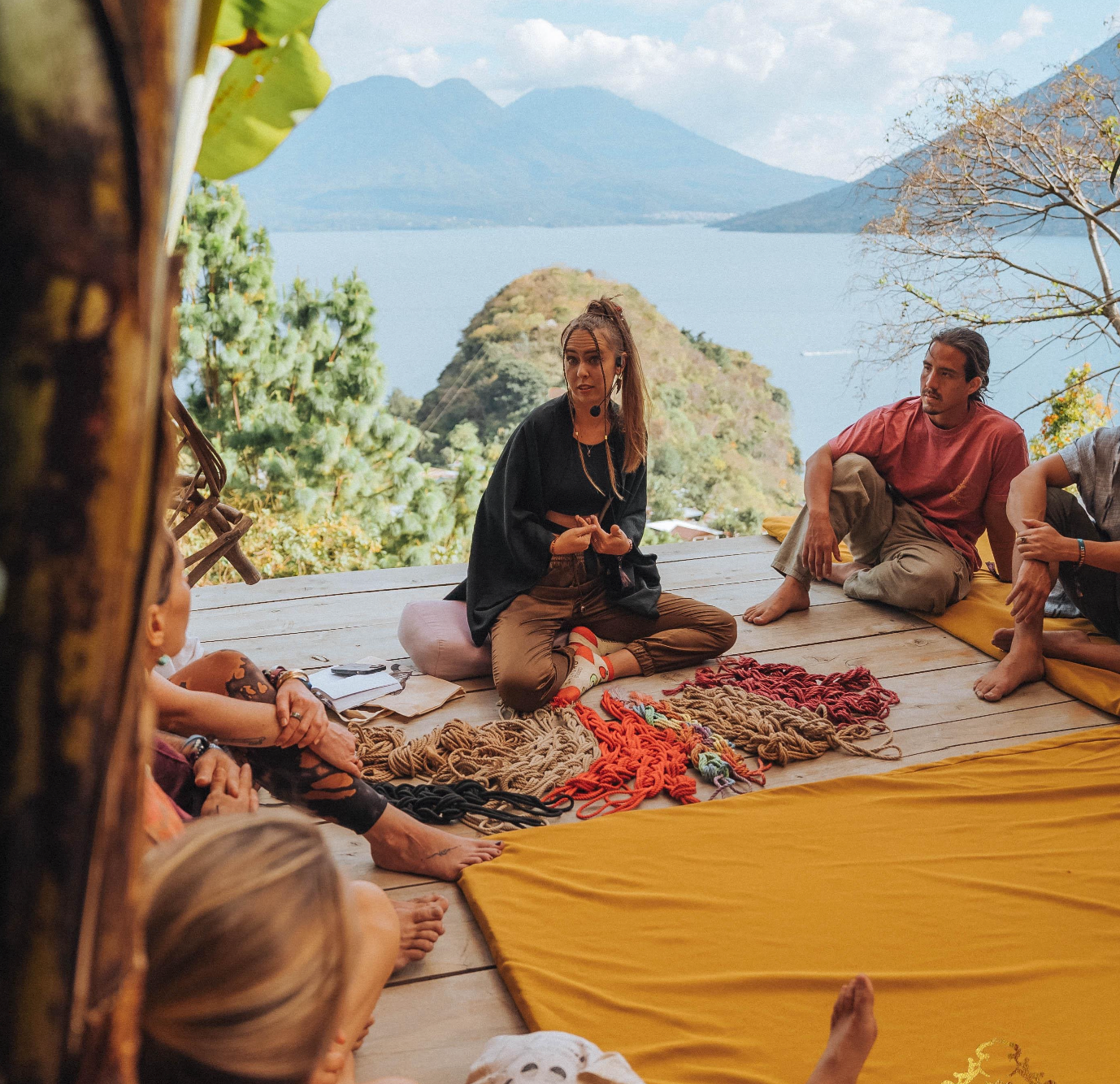
Same rope, completely different journeys. If you're curious how a class with a Japanese artist feels, here is a little window into one:
Is Shibari a BDSM Thing?
This deserves its own answer, because it's usually the question hiding behind the question ;)
Shibari lives happily inside BDSM for many people - and there is zero shame in that. But it doesn't HAVE to be a BDSM thing. When I started tying my friends, they were feeling joy, excitement, a lot of positive sensations in their bodies. Nobody left exhausted. That's what I've been trying to show the world ever since: a shibari experience can be delightful - a story, an art of tying a person into a situation in which they feel safe and happy.
Rope can be kinky, meditative, artistic, romantic - or all of those in one evening. You choose. There is no gatekeeper checking whether you are “kinky enough” (or “zen enough”!) to hold a rope.
Although you should never forget the erotic origins of shibari, even if you just do it for meditation ;)
A Few Words You'll Hear in the Rope World
A tiny dictionary, so tutorials stop sounding like a secret code:
Rigger / shibarite (縛り手) - the person tying. Literally “shibari hand.”
Model / rope bunny / shibariuke (縛り受け) - the person being tied. Literally “shibari receiver.”
Newaza (寝技) - floor work, tying on the ground.
Tsuri (吊り) - suspension.
I collected many more in my shibari vocabulary guide - learn these and tutorials will suddenly make sense!
How to Start (Safely, Please!)
If this article lit a little fire in you - wonderful! Responsible curiosity is hot. But a few honest words before you grab a rope, because as you all know, shibari is a dangerous activity - not scary-dangerous, but respect-it-dangerous, like climbing or motorcycles. Nerves and circulation are real. So:
Start on the floor. Suspension looks cool on Instagram, but it is NOT where you start.
Learn the single column tie first - done well, it should look like a little heart!
The two-finger rule: you should be able to comfortably slide two fingers between the rope and the body.
If something tingles or goes numb - free it up! There is no shame in stopping, ever.
Keep safety shears within reach. Always.
Talk before, during, and after. Communication IS the technique.
Read guides. Take classes. Practice slowly. My article Is Shibari Safe? goes much deeper into all of this. And when you feel ready for hands-on practice, my Shibari Discovery Course walks you through the first essential knots and safety principles step by step - it's exactly where I send my own beginners.
Shibari Is a Feeling
Let me distill everything above into one line: shibari is not really about rope at all. Rope is just the tool - an extension of your hands. Shibari is about slowing down enough to truly notice another human being (or yourself), and letting the rope carry what words can't.
Happy tying, and welcome to the rope family ❤️

Written by
Anastasia
I feel that it's time to share my approach to shibari with you! I have been discovering shibari for myself for 6 years, constantly learning and developing my own style.